 The Lahore Property Guide
Free chapter · Understanding Property in Lahore
Chapter 1: The Pakistani Property Ecosystem
By Adil Builders · Updated 18 September 2026
Before learning Fard, Registry, Intiqal, Khewat, Khasra or NOC, you need the map of the system.
Think of buying property in Pakistan as dealing with several government and organisational layers, each answering a different question.
The biggest mistake a beginner can make is assuming that if one government office says the property is okay, then everything about the property must be okay.
Not necessarily.
A property can have a legitimate ownership record but be part of an unapproved development. A society can exist legitimately while a particular plot has an ownership or transfer problem. A person can possess documents without having the authority to sell.
So start by building the mental model.
The Five Layers You Need to Understand
For a typical Lahore property transaction, think about five separate layers:
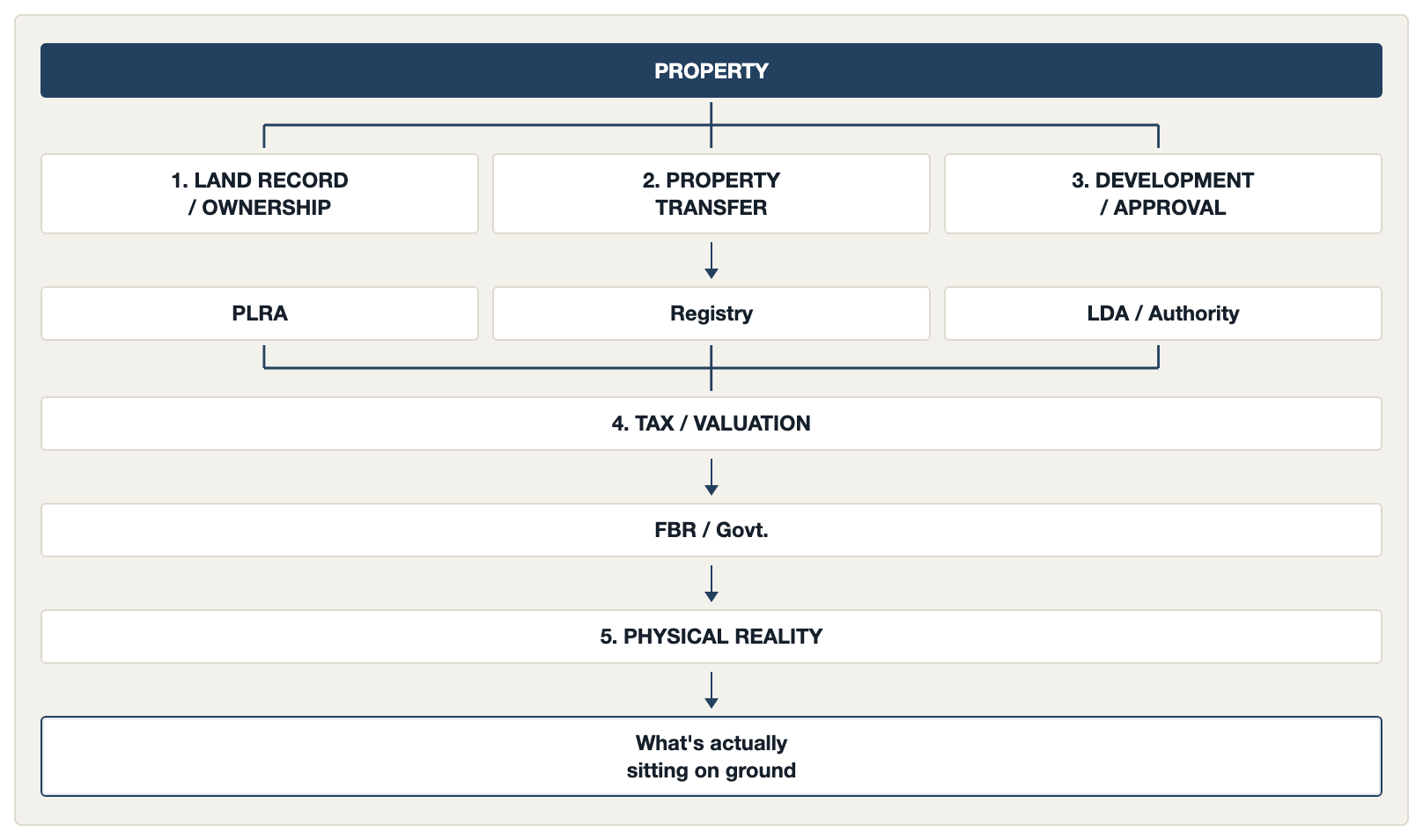
These layers overlap, but they are not the same thing. Take them one at a time.
Layer One: "Who owns this land?"
This is the land-record system.
For Punjab, the major organisation you will encounter is the Punjab Land Records Authority.
Punjab Land Records Authority (PLRA)
PLRA is responsible for maintaining and managing Punjab's land records. Its services include obtaining a Fard, registering property, and recording or attesting mutations.
The question it answers: what does the official land record say about ownership?
This is where concepts such as Fard, Khewat, Khatooni, Khasra, mutation or Intiqal, and ownership records start appearing.
Imagine Ahmed tells you he owns ten marla of land in Raiwind.
You do not simply believe Ahmed. You want to be able to ask what the official land record says. That is the world of PLRA and the revenue records.
Arazi Record Centre
You will also hear about Arazi Record Centres, usually shortened to ARCs.
An ARC is not a separate authority. Think of it as a one-window service centre for land-record services. PLRA describes ARCs as providing services including obtaining a Fard, transferring land, verifying ownership and registering property through computerised systems.
So the mental model is:
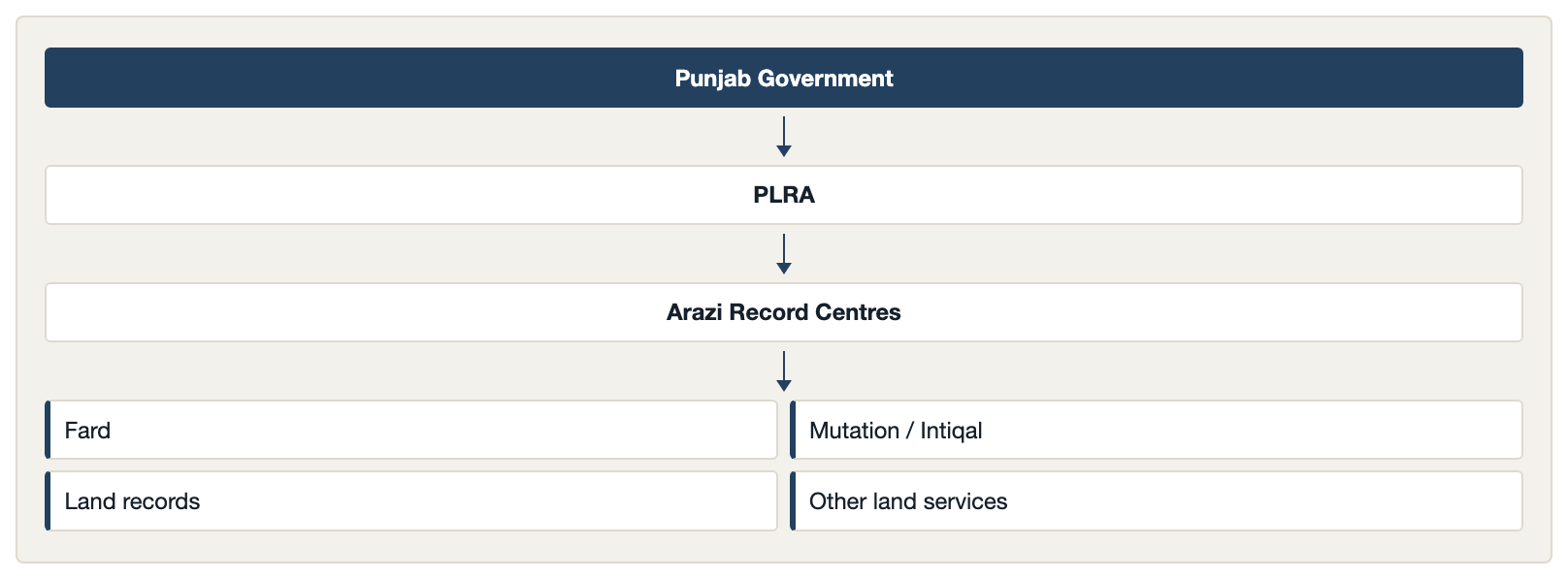
Later chapters go deep into exactly what you can and cannot establish through these records.
Layer Two: "Has the sale actually been legally registered?"
This is where Registry enters.
A registry is essentially the formal registration of the property transaction or deed. PLRA's current registry process involves the buyer, seller and witnesses, verification, appearance before the Sub-Registrar, and issuance of the registered document.
So now there is a distinction worth holding onto:
Land record: who does the government land record show as owner?
Registry: what formally registered transaction or deed transferred the property?
These concepts are closely connected but they are not interchangeable, which is why Chapter 3 spends a great deal of time on Registry against Intiqal.
Who Is the Sub-Registrar?
You will hear this word a lot.
The Sub-Registrar is the official involved in the registration of deeds and documents. Very simplified:
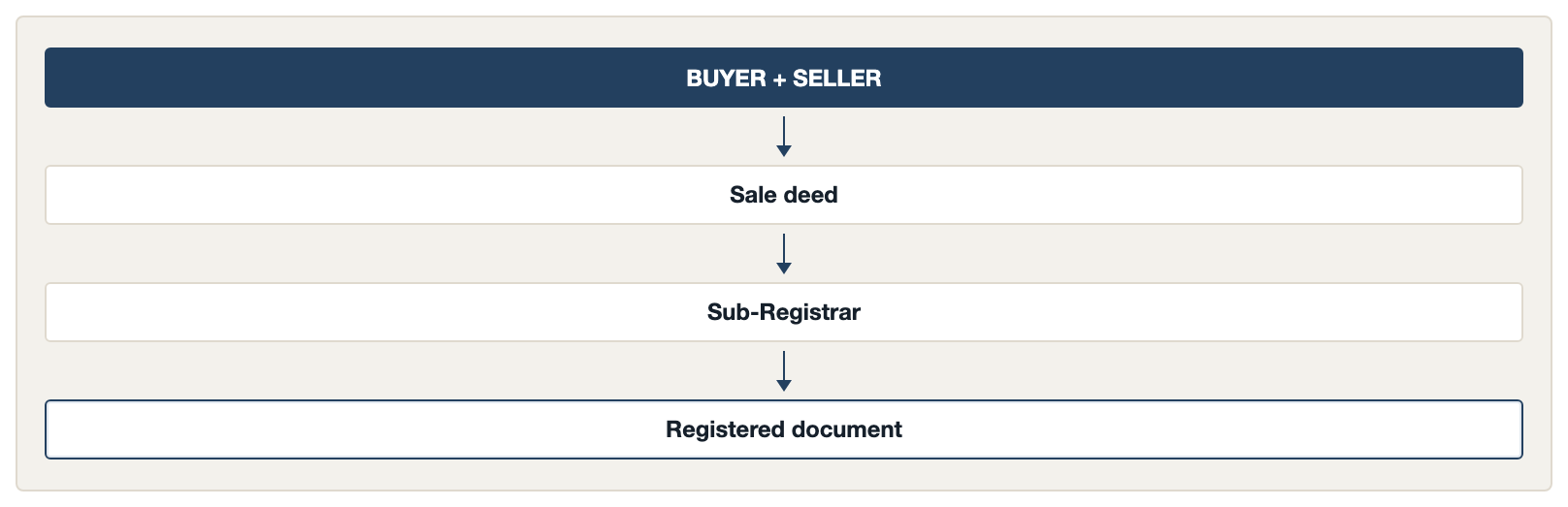
PLRA's current registry guidance specifically describes the request being forwarded to the Sub-Registrar, the statements of the parties and witnesses being recorded, and the registered document then being issued.
So if somebody tells you not to worry because you will "just do the registry," the response is not "great, that's everything." The response is: what exactly is being registered, whose ownership is it based on, and what other verification is required?
That is the mindset this guide is building.
Layer Three: "Is this development itself legitimate?"
This is where property in Lahore gets interesting.
Suppose someone offers a ten-marla plot in XYZ Housing Society, Raiwind Road.
Your first instinct might be to check whether the seller owns it. Good instinct. But there is a second question sitting right beside it: is XYZ Housing Society itself approved to develop and sell plots in that location?
That is an entirely different question, answered by an entirely different authority.
Enter LDA
For Lahore, one of the major authorities you will encounter is the Lahore Development Authority.
Lahore Development Authority (LDA)
LDA deals with Lahore's urban planning and development framework, and provides services and information relating to housing schemes, approvals, building plans and regulations. Its website currently provides specific sections for approved schemes, illegal schemes and regularised schemes.
The question it answers: is this development permitted to exist here, in this form?
And this distinction is critical:
Ownership and development approval are different questions.
Imagine Ahmed owns five acres of land. That might be perfectly legitimate from an ownership perspective.
Ahmed then announces he is going to divide it into a hundred residential plots and sell them. That is now a development and planning question. Owning the underlying land does not automatically mean Ahmed can create and sell a housing scheme however he likes.
LDA's own approval documentation for private housing schemes involves the scheme's Khasra numbers, location plan, master-plan location, boundaries and layout plan.
This Gives Us the First Big Lesson
Suppose someone says: "Don't worry. The land is genuine. I have the Fard."
That answers one question. It does not necessarily answer any of these:
- Is the housing scheme approved?
- Is this particular block approved?
- Is this particular plot part of the approved layout?
- Can residential construction legally take place?
- Does the society have the necessary permissions?
- Is the advertised development actually the same land represented in the records?
Those are separate questions, and a Fard does not answer them.
What Is an NOC?
You will hear NOC constantly in Pakistani real estate. It stands for No Objection Certificate.
Do not fall into the beginner trap of reading it as "the government says everything is perfect."
An NOC is an approval or no-objection relating to a particular matter. Which authority issued it, what it covers, and what stage of development it applies to all matter enormously.
Even within a housing-scheme approval framework there can be distinctions between approval of a layout and subsequent NOC or development permissions. That distinction is explicitly reflected in housing-scheme regulatory systems.
Chapter 6 gives an entire section to separating LOP, NOC, approval, possession and completion, because property dealers use those words very casually and they do not mean the same thing.
Layer Four: Taxes and Valuation
Then there is a completely different layer: how much is this property officially valued at, and what taxes and charges apply to the transaction?
This brings in FBR, government valuation, DC valuation, stamp-related charges, registration charges, taxes applicable to the buyer and seller, and society transfer fees. PLRA itself currently provides a DC Valuation service alongside its Fard, registry and mutation services.
Chapter 8 deals with all of this properly. For now, hold onto one idea:
The price you negotiate is not necessarily the valuation used for every government calculation.
Layer Five: The Physical Property
This layer is not a government department at all. It is simply the question of what actually exists on the ground.
Suppose your documents describe Plot 123, ten marla, XYZ Block, Raiwind Road. You still need to physically verify:
- Is Plot 123 actually there?
- Does its location correspond to the plan?
- Is it actually ten marla?
- Are its boundaries correct?
- Is someone occupying it?
- Is there an encroachment?
- Is the road actually where it is supposed to be?
- Is this actually the plot being sold?
Which is why one sentence is worth remembering above most others in this chapter:
Documents describe property. They do not eliminate the need to inspect property.
So Who Does What?
Here is your first cheat sheet.
| Entity or concept | Your basic mental model |
|---|---|
| PLRA | Land records and land-record services |
| Arazi Record Centre | Where many PLRA land-record services are provided |
| Revenue officials | Deal with various land and revenue record processes |
| Sub-Registrar | Registration of deeds and documents |
| LDA | Lahore's development, planning and approval framework |
| Housing society or developer | May maintain its own allotment, transfer and possession system |
| FBR | Federal tax matters |
| DC / district administration | District, revenue and valuation-related functions |
| Seller | Claims ownership and a right to sell, and must be verified |
| Property dealer | Facilitates the transaction; not your ownership authority |
| Lawyer | Performs legal review and advice; not a government authority |
| Surveyor | Helps establish and verify physical boundaries and measurements |
That last group of distinctions matters more than it looks.
The Property Dealer Is Not the Government
This sounds obvious, but it is one of the most important things for a beginner to internalise.
A property dealer might tell you he has been doing property for twenty years. That may well be true, and useful. But it does not make him PLRA, LDA, the Sub-Registrar, a Revenue Officer, a lawyer, or the owner.
His job is generally to facilitate the transaction. So your mental hierarchy should look like this:
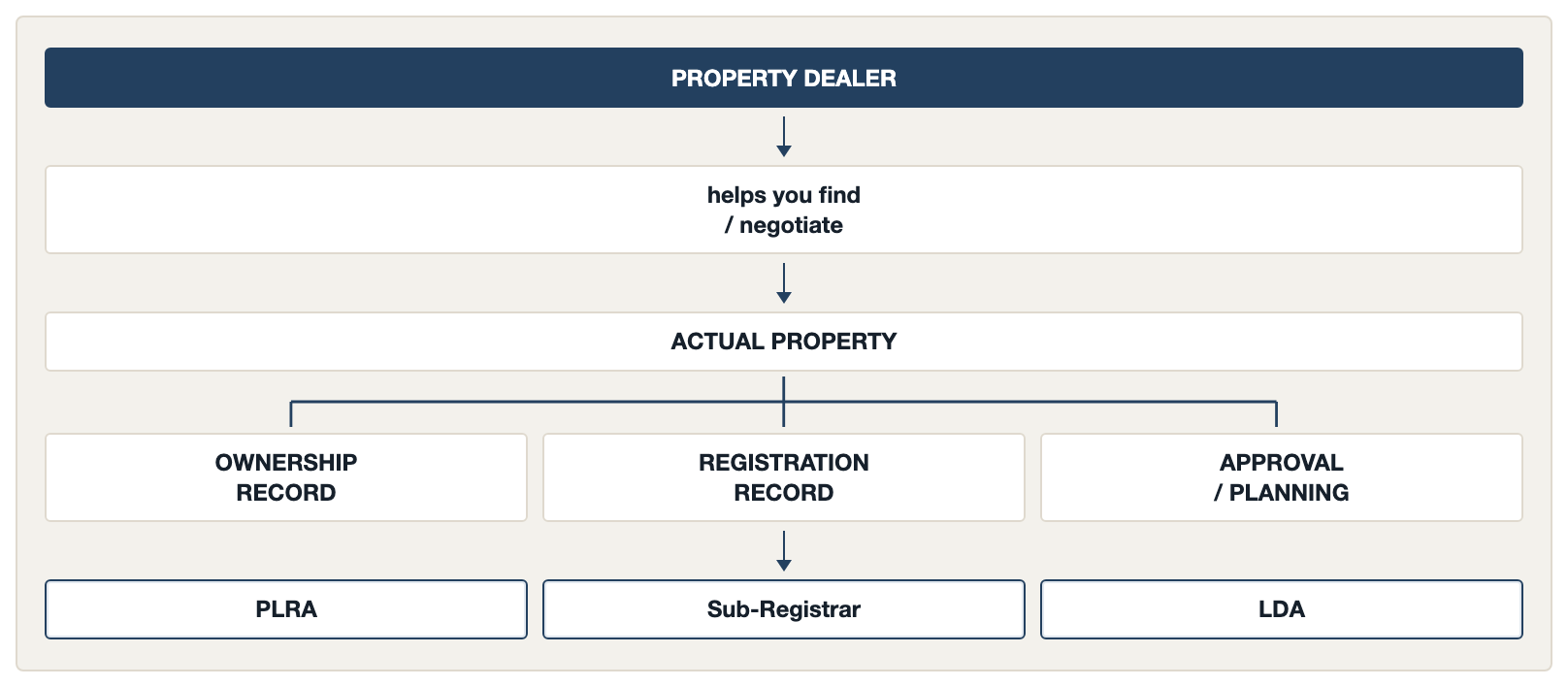
The dealer sits alongside these systems, not above them.
Applying It to the Raiwind Road Example
Suppose tomorrow you see an advertisement:
Ten marla residential plot, Raiwind Road, Rs. 2.5 crore.
And the seller says: "Sir, everything is clear. I have registry, Fard and everything. Just give me twenty lakh token."
You should not give the token.
Your brain should automatically start asking:
- What exactly is this property? Revenue land, an approved society plot, a private housing scheme, a farm plot, a file, an allotted plot, or a plot with possession?
- Who owns it? What do the official records say?
- Who is selling it? Does the person in front of you actually have the legal authority to sell?
- Is the development legitimate? Is the relevant scheme or block approved?
- Does this particular plot exist within that approved framework?
- Is there any claim, dispute or encumbrance?
- What exactly will happen when you pay?
- What documents will you receive?
- How will ownership ultimately be transferred into your name?
- What physically exists on the ground?
That is the property buyer's mindset, and every remaining chapter is really an expansion of one of those ten questions.
The Most Important Concept in This Chapter
If you remember one diagram from this chapter, make it this one:
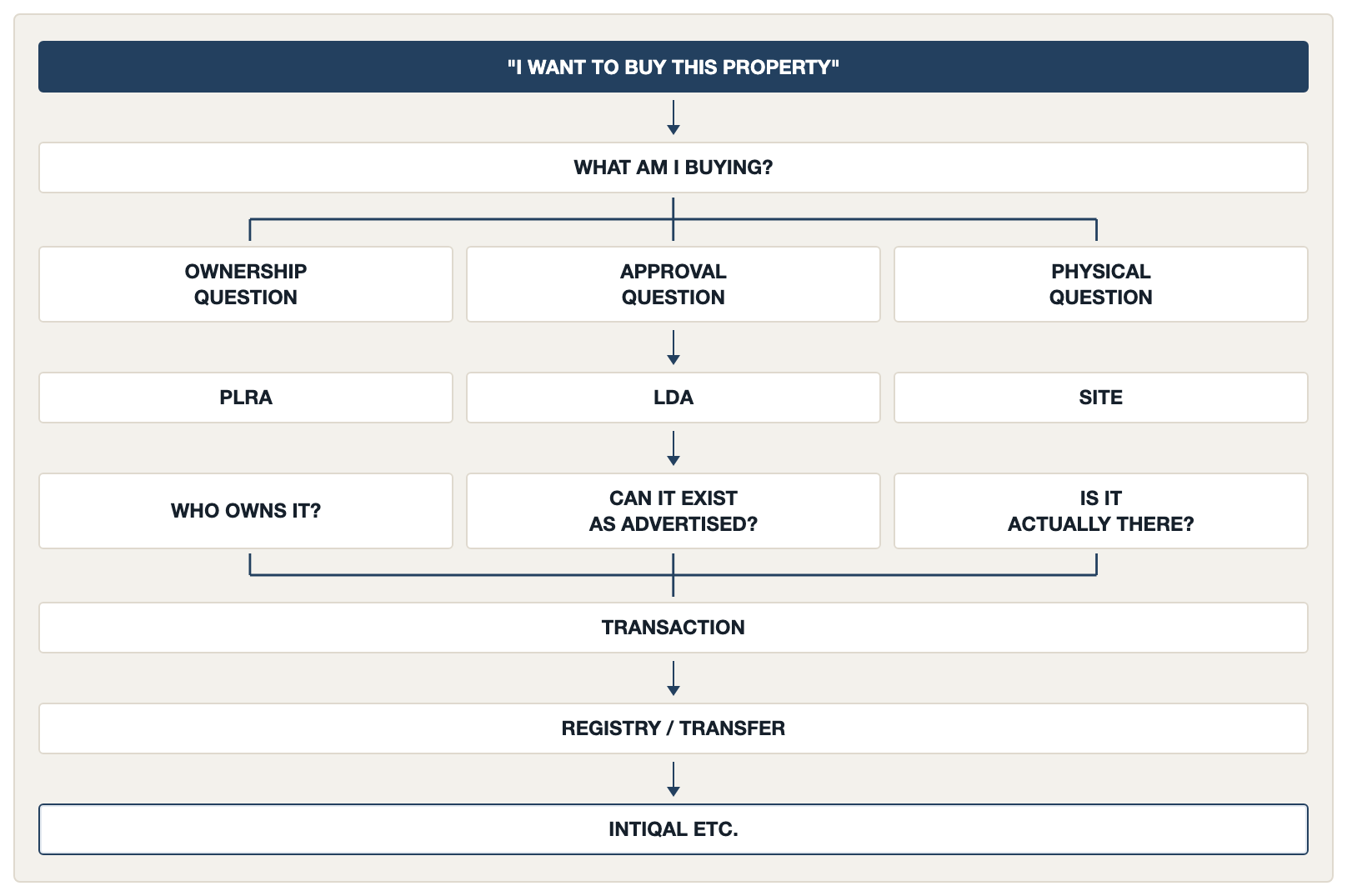
And then there is a fourth dimension running through everything: is there anything hidden that could come back and hurt you later? That is the due-diligence layer, and Chapter 5 belongs to it.
A Warning: "Government Record" Does Not Mean "Everything Is Fine"
This is probably the most valuable lesson in the chapter.
Consider three statements:
"Ahmed is recorded as owner." Potentially an ownership answer.
"The society is approved." Potentially a development answer.
"This is physically Plot 123 and nobody has a claim against it." A different set of questions altogether.
You need to establish all three. Which is why property due diligence is never simply "show me the Fard." It is closer to:
Show me the complete chain of evidence that this specific piece of land is legally owned by this person, legally transferable to me, legally usable for my intended purpose, free of problematic claims, and physically corresponds to what I am buying.
What This Chapter Established
- A Lahore property transaction sits across five separate layers: ownership, registration, development approval, tax and valuation, and physical reality.
- Different authorities answer different questions. PLRA answers ownership, the Sub-Registrar answers registration, LDA answers development approval, FBR answers tax.
- An answer from one layer is not an answer from another. A genuine Fard says nothing about whether the scheme is approved.
- An NOC is a permission about a particular matter, not a blanket certificate of health.
- The property dealer facilitates the transaction. He is not a verification authority.
- Documents describe property. They never remove the need to inspect it.